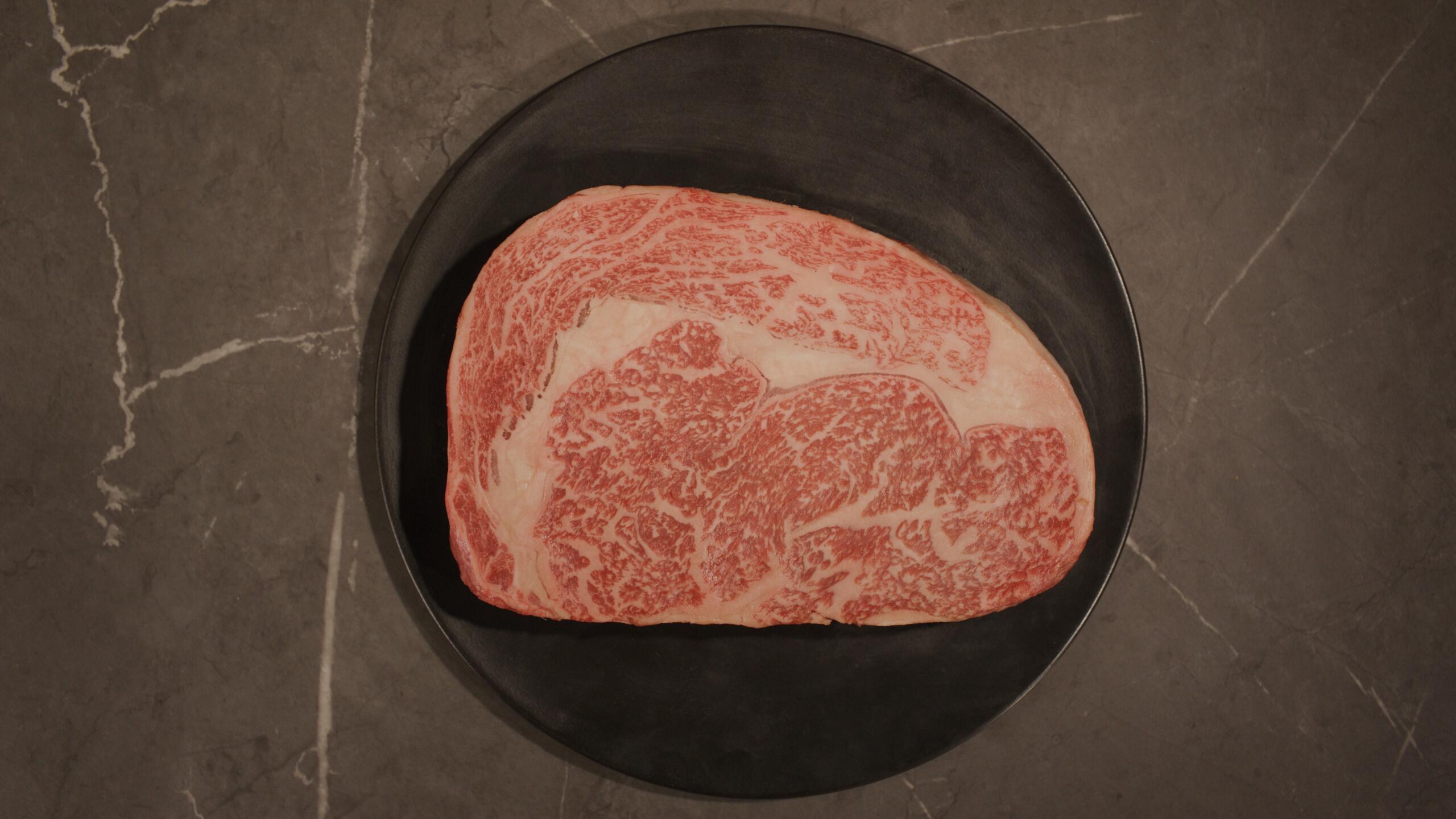
What Makes Fullblood Wagyu Different: Marbling, Fat, Flavour and Quality
Two steaks can both say wagyu, both carry a marbling score of 9, and still eat differently. The gap usually

“Fullblood” is the word on the most expensive wagyu in the cabinet, and it’s also the one most buyers skim past. It isn’t a score, a brand or a cooking style but a statement about genetics, and the main reason two steaks with the same score can eat differently. If you’ve wondered whether our Local Full Blood Wagyu really differs from the crossbred wagyu beside it, here’s what the term means, how it differs from purebred and F1 to F4, and how to check it before you buy.
Wagyu means “Japanese cow” and covers four breeds: the Japanese Black (Kuroge), the Japanese Brown (Akaushi), the Japanese Shorthorn and the Japanese Polled. The Black is by far the most prevalent and the one prized for exceptional marbling, which is why most Fullblood in Australia traces back to it.
Australian wagyu started when Japanese wagyu cattle were first imported several decades ago. Some herds were kept entirely within those Japanese bloodlines. Others were crossed with the breeds already on Australian farms, which is where the F1 to F4 range comes from. Both paths worked, and Australia is now recognised around the world for premium wagyu. Fullblood tells you which path an animal took.
Fullblood. Every ancestor on both the sire’s and the dam’s side is wagyu, so the animal carries 100 percent wagyu genetics and its lineage can be traced to Japan. Nothing else has been bred in at any point.
Purebred. 93.75 percent wagyu genetics or more, reached by breeding wagyu back into a crossbred line over generations until little of the other breed remains.
Crossbred, F1 to F4. Wagyu crossed with another breed. F1 at 50 percent, F2 at 75, F3 at 87.5, F4 at 93.75. Our Local Wagyu F1 to F4 range sits here.
F4 and purebred share a percentage, and neither is Fullblood: both can carry a trace of another breed somewhere in their history, and a Fullblood cannot. Breeding up gets you to purebred, never to Fullblood.
Wagyu cattle are genetically inclined to store fat inside the muscle rather than around it, and the Japanese Black does this better than any other breed. Keep the genetics undiluted and the trait comes through at full strength, so Fullblood usually brings finer, more evenly spread marbling and a deeper umami, while crossbred wagyu gives a more familiar steak character with wagyu softness.
The fat itself changes too. Fullblood has more oleic acid and more unsaturated fat than crossbred wagyu, and oleic acid lowers the melting point of the fat, so it softens sooner and finishes clean rather than waxy. L’grow, one of our producers, also finds Fullblood responds better to long, careful feeding than F1. Our marbling guide covers how all of this is scored.
Look for the breed type on the label. Breed type, origin and marbling score should sit together on the packet or product page; a seller who has the information prints it.
Ask who raised it. For Australian Fullblood that means a named producer and a farm, region or breeding program. “Australian wagyu” with nothing after it is not an answer.
Read the score alongside the word. Fullblood is not automatically the most marbled cut in the cabinet: a Fullblood scotch fillet at 6 to 7 exists, and so does crossbred at 8 to 9.
Treat a bargain as a question. Fullblood is slow and costly to produce, with specialised feed, long feeding and patient low-stress farming, so a price well under every comparable listing usually means the genetics or grade are not what the label says. Our buyer’s checklist goes through the other red flags, including “wagyu-style” labelling with no stated breed percentage.
That checklist is how we choose what to stock at Lux Wagyu House, and our Fullblood comes from two producers. Stone Axe Wagyu raises heritage Japanese bloodlines at altitude in Victoria and New South Wales, grain-feeds for over 500 days and appears regularly on lists of Australia’s most trusted wagyu brands. L’grow Fullblood starts with 100 percent Japanese genetics, is finished for more than 400 days on a fermented barley and silage ration, and won the Fullblood class Gold Medal at the 2026 Wagyu Branded Beef Competition.
Every product page shows origin, breed type, marbling score and Halal status, and our Australian wagyu is all Halal-certified. Since 2020 we’ve supplied chefs, butchers and home cooks across WA from our store at 5/11 Malcolm Road, Maddington, with Perth metro delivery, and enquiries welcome for locations outside our delivery area.
Fullblood is the one word on a wagyu label that describes the animal rather than the carcass. It tells you the genetics are entirely Japanese wagyu, which shapes the marbling, the fat and the flavour before feeding even begins. Read it with the marbling score and the producer’s name and you’ll know what you’re paying for.
Fullblood means every ancestor on both sides was wagyu: 100 percent wagyu genetics, traceable to Japan, with no other breed introduced. It describes breed type, not marbling.
No. Purebred means 93.75 percent wagyu or more, reached by grading up from crossbred stock over generations. Fullblood has never been crossed at all.
It’s different rather than simply better. Fullblood tends to give finer marbling and a deeper, more complex flavour; crossbred gives a steak that tastes more familiar with wagyu tenderness. Many cooks keep Fullblood for occasions and F1 to F4 for midweek.
No. A5 is a Japanese carcass grade, and Japanese wagyu is raised in Japan. Australian Fullblood carries the same genetics but is raised here and graded on the AUS-MEAT marbling scale.
At Lux Wagyu House in Maddington, online or in store. We stock Stone Axe and L’grow Fullblood, Halal-certified and graded. We offer Perth metro delivery, with enquiries welcome for locations outside our delivery area.
Two steaks can both say wagyu, both carry a marbling score of 9, and still eat differently. The gap usually

Every wagyu label carries a number, 6-7, 8-9, 9+, BMS 11-12, and that number tells you more about what ends