Fullblood Wagyu Explained: What the Label Means and Why It Matters
“Fullblood” is the word on the most expensive wagyu in the cabinet, and it’s also the one most buyers skim
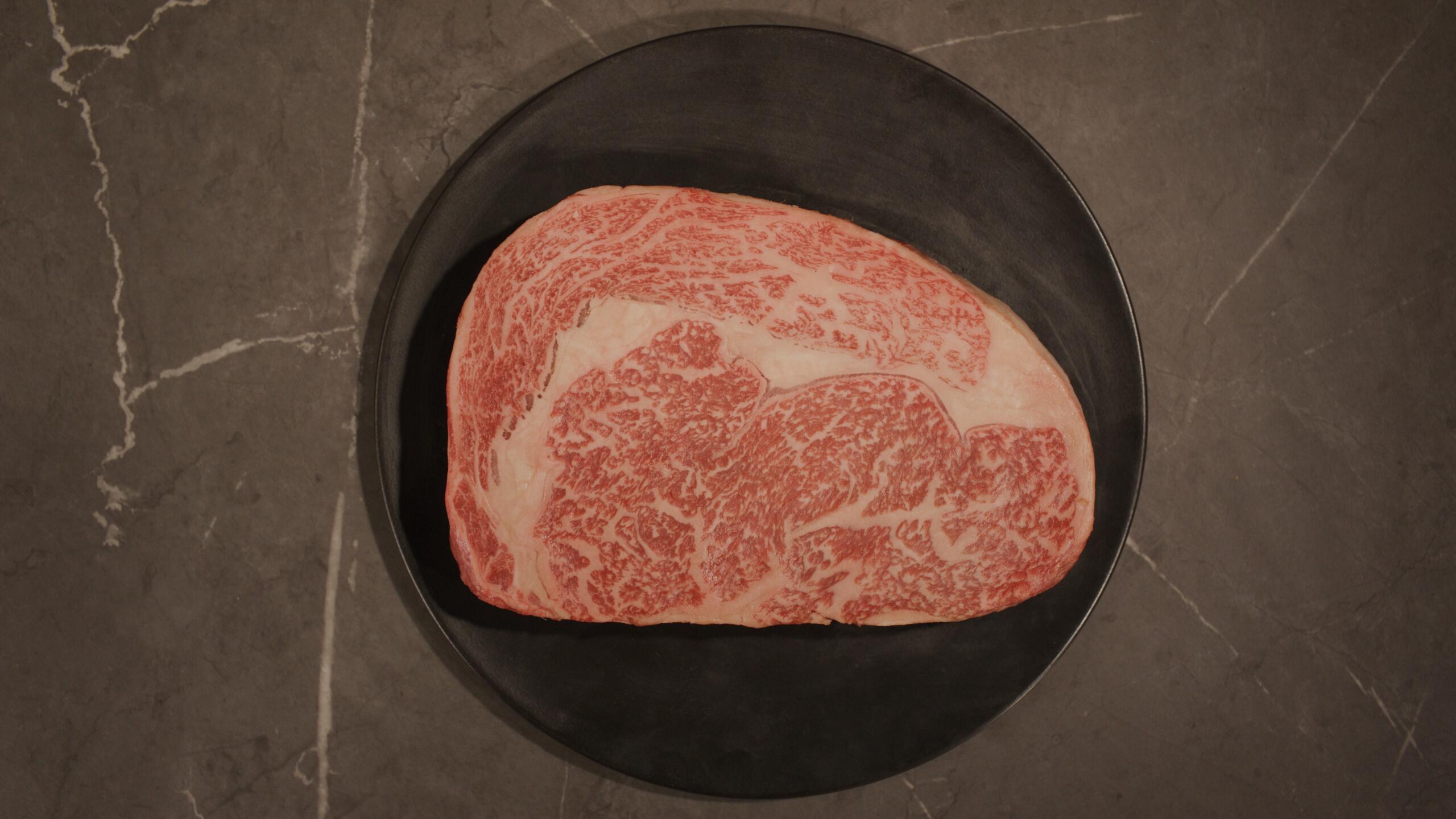
Two steaks can both say wagyu, both carry a marbling score of 9, and still eat differently. The gap usually comes down to breed type, and the top of that ladder is Fullblood. Here’s what sets Fullblood apart on the plate, how to judge its quality and how to cook it, with our own Local Full Blood Wagyu range as the worked example.
Put a Fullblood scotch fillet beside a crossbred one at the same score and the difference is pattern, not amount: fine-grained, clearly defined marbling spread consistently through the muscle, closer to lace than to streaks, with the meat a shade pinker than ordinary beef. Crossbred at the same score tends to marble more coarsely.
The reason is the Japanese Black (Kuroge) genetics behind Fullblood. The breed stores fat inside the muscle more readily than any other, and undiluted, the trait shows at full strength. It’s also why Fullblood so often sits at the top of the Australian scale, 0 to 9 with 9+ for carcasses well above a 9. Most of our Stone Axe and L’grow Fullblood sits at 9 to 9+, and our marbling guide explains how the scores are read.
Marbling is only half of it; what the fat is made of matters as much. Wagyu fat is unusually high in oleic acid, a monounsaturated fat, and Fullblood carries more of it, and more unsaturated fat overall, than crossbred. L’grow cites a 2023 study in the journal Animals comparing fatty acid profiles in wagyu and crossbred cattle that found more unsaturated fat in Fullblood marbling.
Oleic acid lowers the fat’s melting point, so Fullblood fat softens sooner and dissolves into the meat as it cooks rather than sitting on top, leaving a soft, clean finish rather than a heavy one. Research also links oleic acid to heart health, which our health benefits post covers, a bonus rather than a reason to buy.
Fullblood brings a deeper umami than crossbred, with beef flavour behind it rather than in front. The 2024 Wagyu Branded Beef Competition judges described L’grow Fullblood as a “toasted herb finish with notes of caramel and delicate honey”, and the Stone Axe notes on our product pages run the same way: buttery and caramel notes, a toasty, silky finish and lasting tenderness. Richness is part of the character, so Fullblood suits a smaller serve.
Genetics give the potential; raising decides whether it’s reached. That’s what to check.
Days on feed. Wagyu needs time on grain to express its marbling, and under 300 to 320 days may not be enough. Stone Axe Wagyu grain-feeds for over 500 days. L’grow Fullblood is finished on the Korean Feeding Method for more than 400 days, a ration of fermented barley and silage that L’grow credits with finer marbling and higher oleic acid, and says Fullblood responds to better than F1.
How the cattle lived. Stress works against marbling. Stone Axe raises its herds in low-stress conditions on high-altitude Victorian and New South Wales farms; L’grow selects each calf for temperament, early-life care and traceability, then raises it with rotational grazing and calm handling on river-fed highland pastures in eastern Australia.
Who can vouch for it. A named producer, a farm or region and a marbling score on the label. Both our producers give all three, and judges add an outside opinion: L’grow’s 2026 Gold followed a 2025 Class Championship in the commercial MS 5 to 7 class, and Stone Axe is award-winning Fullblood in its own right.
Match the cut to the occasion. At 9 to 9+ the fat carries the dish, so the richest cuts are best cut thin for shabu shabu, yakiniku or sukiyaki, where they need seconds. A 9+ scotch fillet can feel heavy as a 300 to 400 g steak for one, so share it or buy smaller.
Cook it fast and simply. A hard sear on each side takes a Fullblood steak to medium-rare because the fat softens so early; push it further and the marbling renders out before you sit down. Season lightly and let it rest.
Every cut we stock shows its origin, breed type, score and Halal status, and all our Australian wagyu is Halal-certified. Stone Axe Fullblood runs from scotch fillet and OP rib to shabu shabu slices and burger patties; L’grow Fullblood is cube roll and striploin at 9+. We’re at 5/11 Malcolm Road, Maddington, and offer Perth metro delivery, with enquiries welcome for locations outside our delivery area.
Before you pay for Fullblood, check four things: does the label say Fullblood and give a marbling score? Can the seller name the producer and the region? Were the cattle fed for well over 400 days in low-stress conditions? Does the marbling look fine and even rather than streaky? If you can answer yes to all four, you’re in safe hands.
Genetics. Fullblood is 100 percent wagyu with no crossbreeding, which gives finer, more even marbling, fat higher in oleic acid with a lower melting point, and a deeper umami than crossbred F1 to F4.
No. Breed type and marbling score are separate measures. Most Fullblood scores high, ours at 9 to 9+ on most cuts, but a Fullblood can grade 6 to 7 and a crossbred can grade 8 to 9.
It has a different fat profile, higher in monounsaturated fat and oleic acid, and research suggests oleic acid may support heart health. It is still rich, high-fat beef, so enjoy it in sensible portions.
Shabu shabu or Asian BBQ slices: they show the marbling at its most dramatic without committing to a full steak. For a steak, a scotch fillet shared between two.
From Lux Wagyu House in Maddington, Perth: Stone Axe and L’grow Fullblood, graded and Halal-certified. We offer Perth metro delivery, with enquiries welcome for locations outside our delivery area.
“Fullblood” is the word on the most expensive wagyu in the cabinet, and it’s also the one most buyers skim

Every wagyu label carries a number, 6-7, 8-9, 9+, BMS 11-12, and that number tells you more about what ends